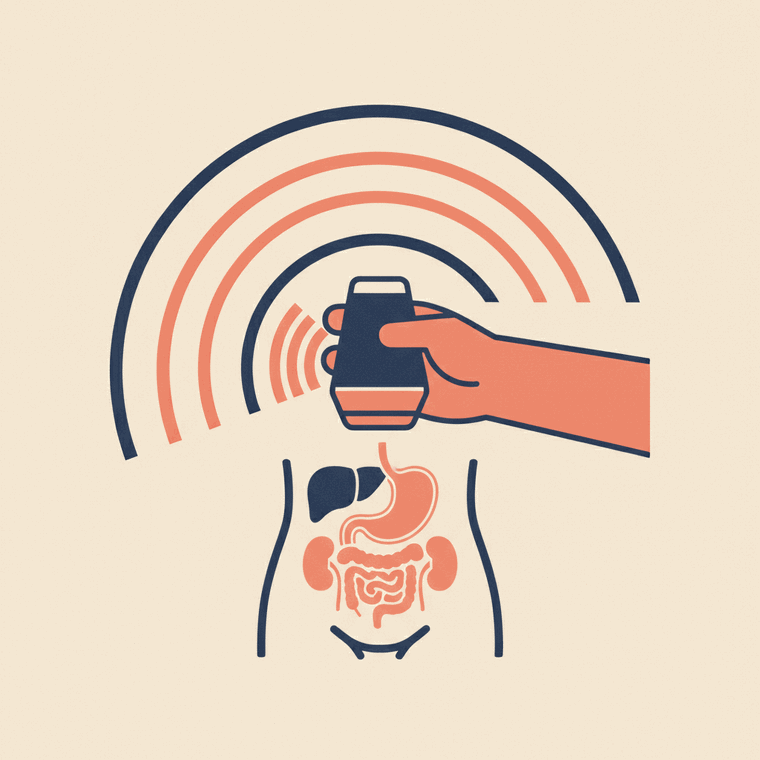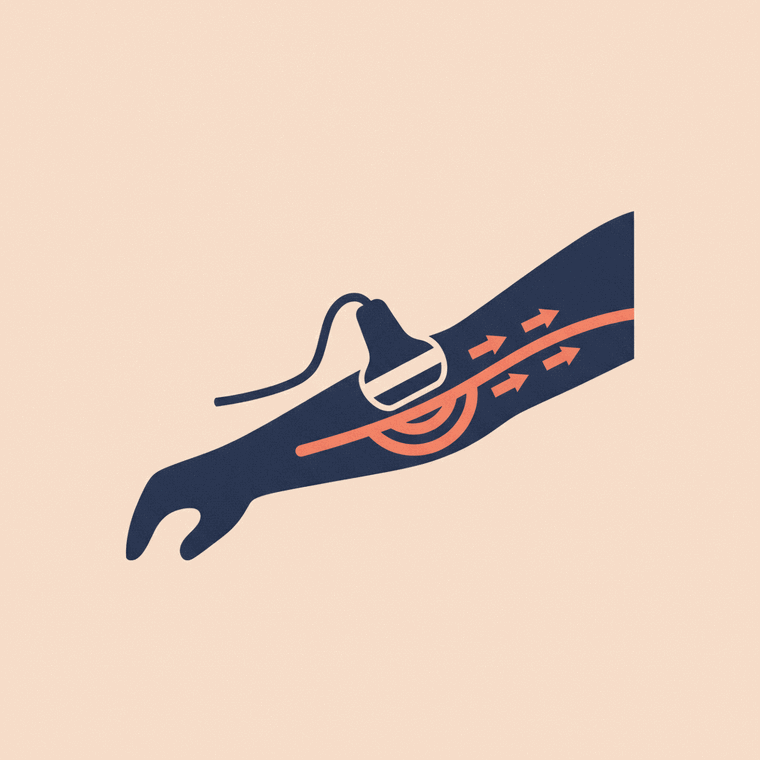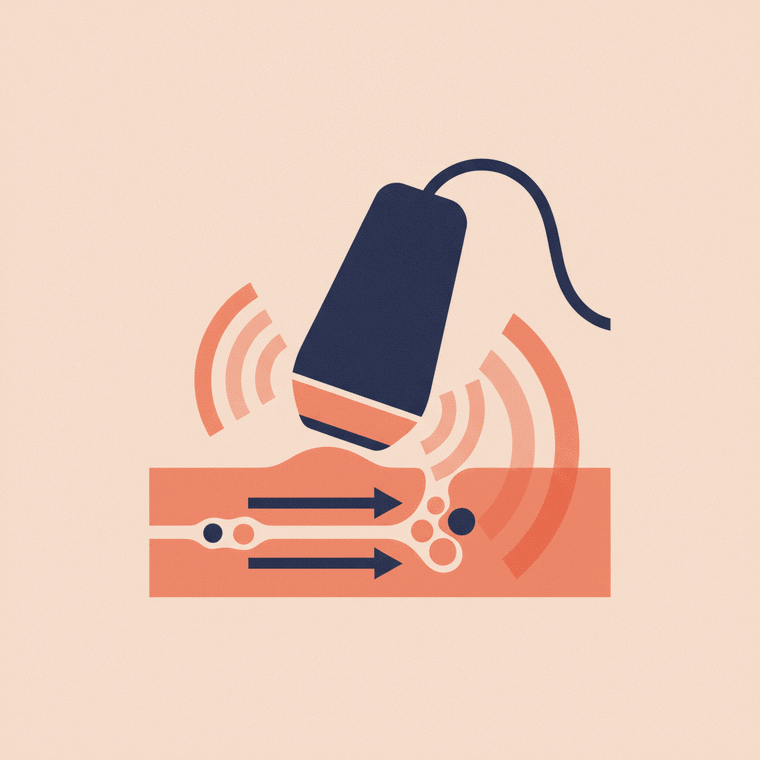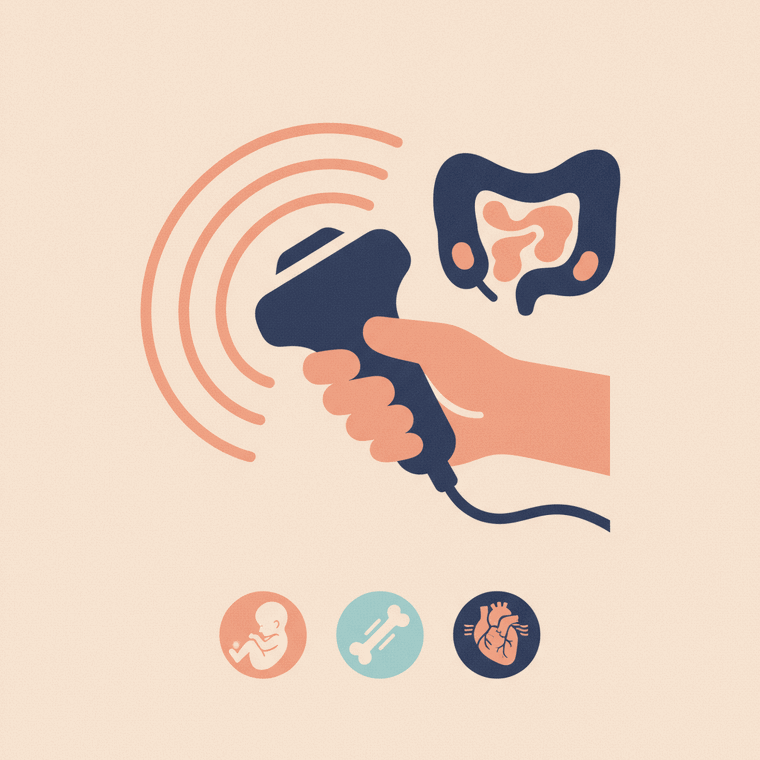
Ultrasound is used right across the body — to monitor pregnancy, examine abdominal organs (liver, gallbladder, kidneys), assess the thyroid, breast and testes, check blood flow in vessels (Doppler), look at the heart (an echocardiogram), and guide procedures like biopsies. Because it's radiation-free, real-time and widely available, it's often the first test a doctor reaches for.
Key takeaways
- Ultrasound monitors pregnancy and examines abdominal and soft-tissue organs.
- It assesses blood flow in arteries and veins (Doppler) and looks at the heart (echo).
- It guides procedures such as biopsies and drainages in real time.
- It's radiation-free, real-time and widely available.
Say “ultrasound” and most people think of pregnancy scans. But that’s only one of its many jobs — because it’s radiation-free, real-time and widely available, ultrasound is one of the most versatile tests in medicine.[1]
Across the body
Ultrasound is used to investigate pain, swelling and infection, and to examine a long list of organs and structures:[1]
- Pregnancy — monitoring the baby’s growth and wellbeing.
- Abdomen — the liver, gallbladder and bile ducts, kidneys, pancreas, spleen and the aorta.
- Pelvis — the bladder, uterus and ovaries.
- Soft tissues — the thyroid and neck, breast lumps, muscles, tendons and joints, and the testes.
- Blood vessels — checking blood flow with the Doppler technique (for clots, narrowing and circulation).
- The heart — an echocardiogram (“echo”), assessing valves and function.
In infants, it can even image the brain, hips and spine, because their bones are softer.[1]
Guiding procedures
Beyond diagnosis, ultrasound is widely used to guide procedures in real time — steering a needle for a biopsy or drainage, or finding a vein for access — because the operator can watch the needle as it moves.[1]
Why it’s often first
Ultrasound is frequently the first-line test because it’s safe, quick and inexpensive, with no radiation.[1] If it can answer the question — say, checking for gallstones or assessing a thyroid lump — there’s often no need for a scan involving radiation. Where it can’t reach (behind bone or gas, or very deep), CT or MRI takes over.
Frequently asked questions
Is ultrasound only used in pregnancy?
No — pregnancy is one common use, but ultrasound is used across the body: the abdomen, pelvis, thyroid, breast, blood vessels, heart, muscles and joints, and to guide procedures.[1]
Can ultrasound replace a CT or MRI?
Sometimes — it’s often the first test. But sound can’t pass through bone or gas, so CT or MRI is used where ultrasound can’t reach or see clearly.[1]
What’s an echocardiogram?
It’s an ultrasound of the heart — assessing the heart muscle, valves and how well it’s pumping, all without radiation.[1]
Sources
- RadiologyInfo.org (RSNA & ACR) — General Ultrasound — www.radiologyinfo.org/en/info/genus
- RANZCR / InsideRadiology — Ultrasound (Coombs) — www.insideradiology.com.au/ultrasound-hp/