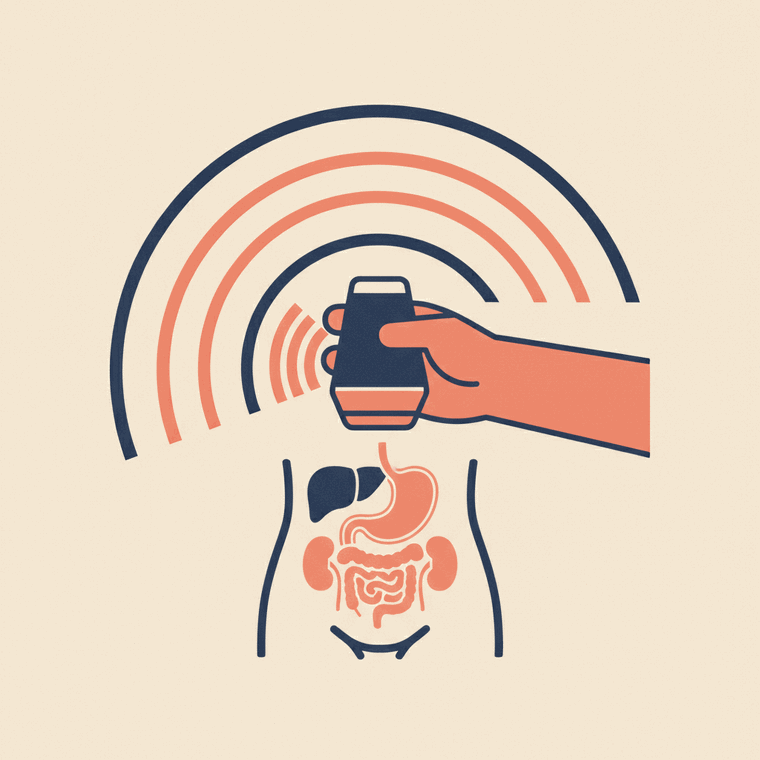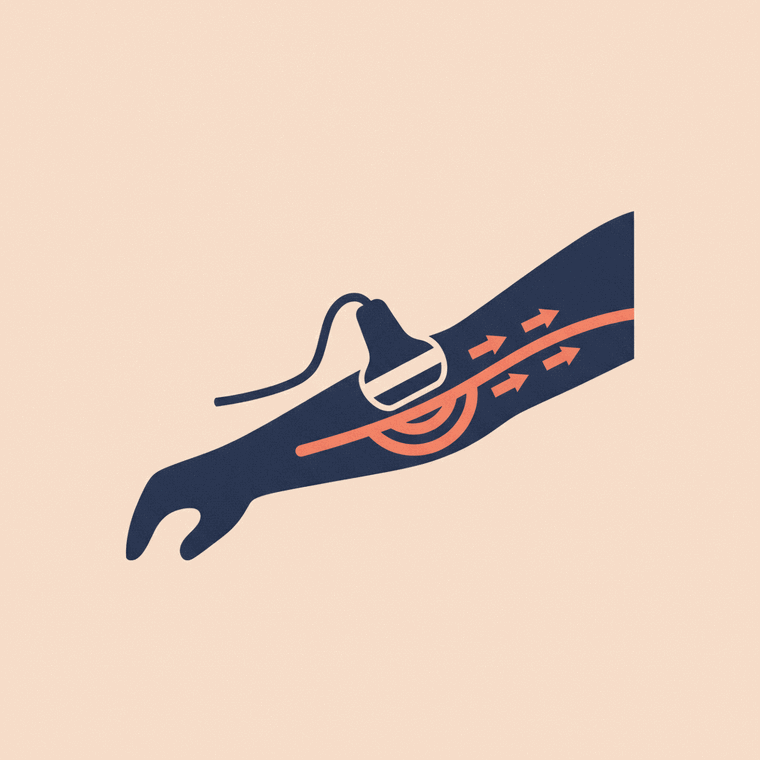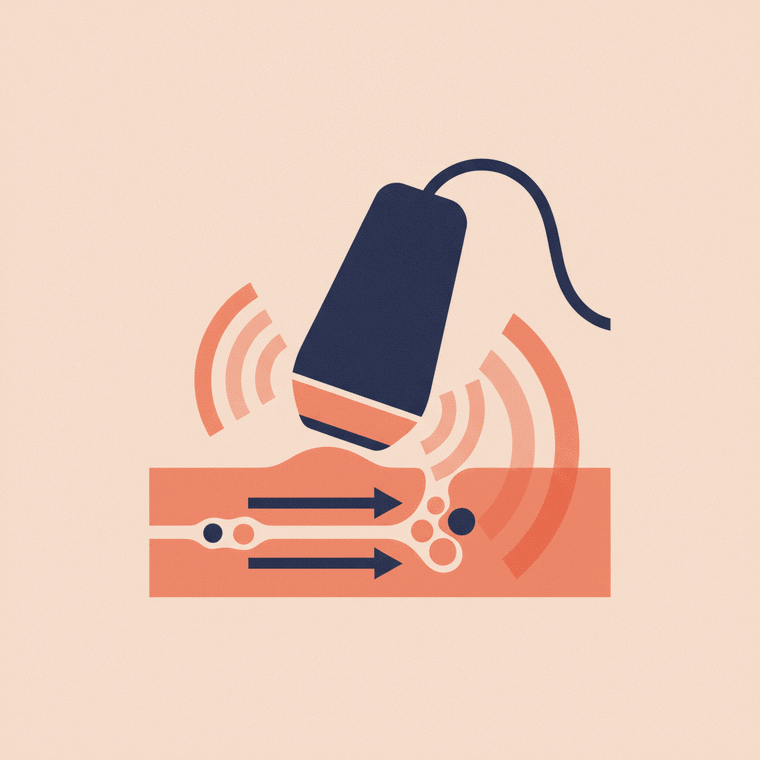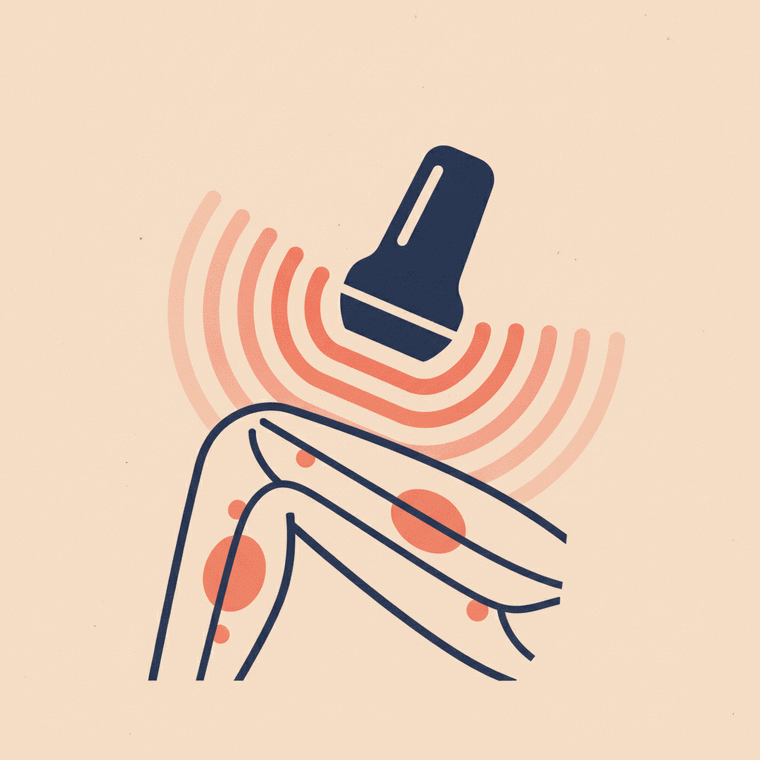
A venous Doppler is an ultrasound of the veins — most often the leg veins, to check for a blood clot (deep vein thrombosis, or DVT). It uses sound waves, not radiation, to show blood flow, and the sonographer gently presses with the probe to see whether the vein compresses normally — a vein with a clot won't. It's painless and needs no preparation or aftercare.
Key takeaways
- A venous Doppler checks the veins — commonly the legs for a clot (DVT).
- It uses sound waves and shows blood flow — no radiation.
- The sonographer presses gently to test whether the vein compresses (a clot stops it).
- It's painless, with no preparation or aftercare.
If you’ve turned up with a swollen, painful calf, a venous Doppler is the scan that’s usually done to check for a clot. Here’s what it involves.
What it’s for
A venous Doppler is an ultrasound of the veins — most commonly the leg veins, to look for a blood clot (deep vein thrombosis, DVT).[1] The most frequent trigger is a swollen, painful leg. It can also assess varicose veins and how well the leg veins are working. Like all ultrasound, it uses sound waves with no radiation.
Why the sonographer presses on your leg
Here’s the clever part. As well as showing blood flow with Doppler, the sonographer gently presses the probe against the vein. A healthy vein compresses flat under gentle pressure; a vein containing a clot won’t compress.[1] This “compression test,” combined with the Doppler flow, is how a DVT is found. So the pressing isn’t the sonographer being rough — it’s a key part of the test.
What to expect
You lie down and the sonographer applies gel and moves the probe along the vein, pressing at intervals.[1] You may hear the blood flow as a “whooshing” sound. It’s painless (though a tender leg may feel the pressure), with no preparation or aftercare.
Frequently asked questions
Why does the sonographer press on my leg?
Gentle pressure tests whether the vein compresses normally. A vein that won’t compress can indicate a clot — so it’s a key part of checking for DVT.[1]
Is a venous Doppler safe?
Yes — it’s a form of ultrasound, so it uses no radiation and has no known harmful effects.[1]
Do I need to prepare for it?
No — there’s usually no preparation and no aftercare for a leg venous Doppler.[1]
Sources
- RadiologyInfo.org (RSNA & ACR) — General Ultrasound (Doppler) — www.radiologyinfo.org/en/info/genus
- RANZCR / InsideRadiology — Ultrasound (Coombs) — www.insideradiology.com.au/ultrasound-hp/