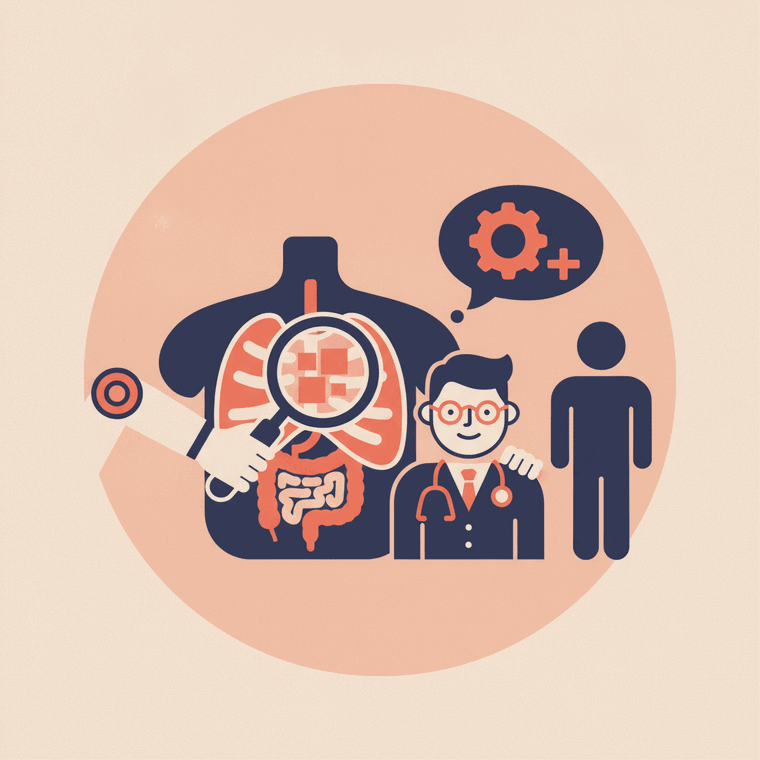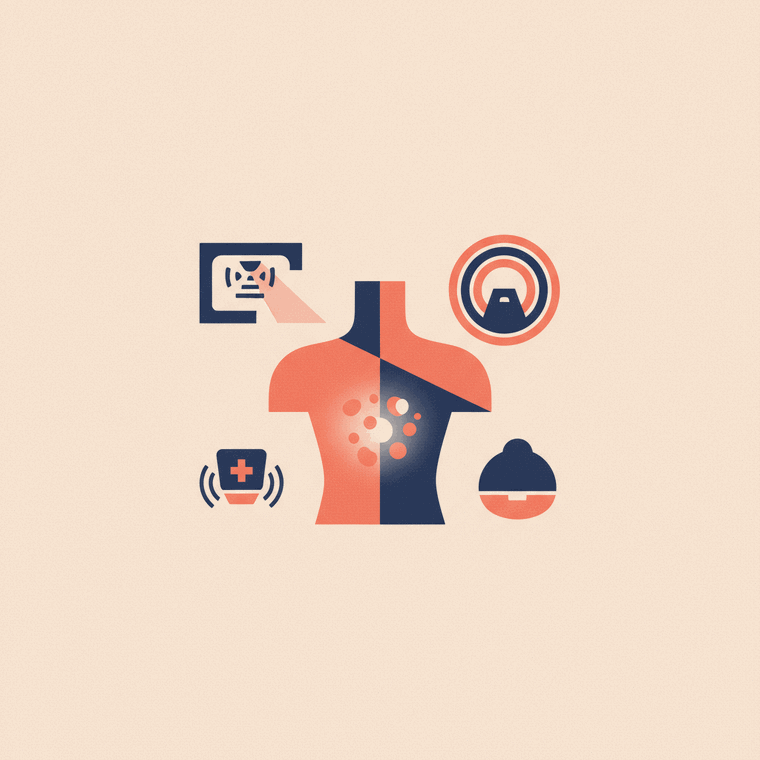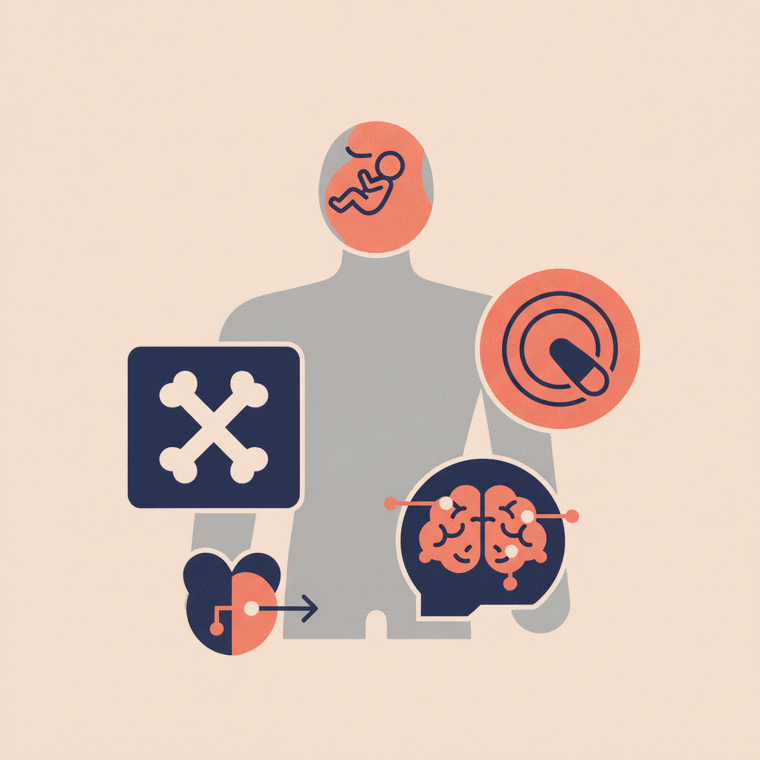
Radiology is used to diagnose disease and injury, screen healthy people for early signs (like breast screening), guide treatment and procedures (steering needles, placing stents, planning surgery or radiotherapy), and monitor how a known condition changes over time. It spans almost every area of medicine, from emergencies to cancer care.
Key takeaways
- Radiology diagnoses disease and injury.
- It screens healthy people for early signs (e.g. breast screening).
- It guides procedures and treatment planning (interventional radiology).
- It monitors known conditions over time.
People often think of radiology as just “taking scans to find out what’s wrong.” It does that — but its uses are far broader, spanning almost every area of medicine.
1. Diagnosis
The most familiar use: helping to diagnose disease and injury — a broken bone, pneumonia, a torn ligament, a tumour, a blood clot. The right scan often gives an answer that an examination alone can’t.[1]
2. Screening and early detection
Radiology is used to screen people without symptoms for early signs of disease — most notably breast screening with mammography, which aims to find cancer before it can be seen or felt.[2] Early detection often means more effective treatment.
3. Guiding treatment and procedures
Imaging guides treatment in real time and in planning — much of this is interventional radiology, done by a specialised radiologist:[1]
- steering needles for biopsies, drainages and injections;
- placing catheters and stents, and treating aneurysms or tumours through tiny incisions;
- planning surgery or radiotherapy with detailed images.
4. Monitoring
For a known condition, scans track change over time — whether a cancer is responding to treatment, whether a problem is improving or worsening, or how something is healing.[1]
Across all of medicine
Because of this range, radiology touches nearly every specialty — emergency medicine (fast CT in trauma), cancer care (staging and monitoring with PET-CT), maternity (ultrasound), orthopaedics (X-ray and MRI), and many more.[1]
Frequently asked questions
Is radiology only for diagnosis?
No — beyond diagnosis, it’s used for screening (early detection), guiding procedures and treatment planning, and monitoring how a condition changes over time.[1]
Can imaging be used during treatment, not just before?
Yes — it guides procedures in real time (like steering a biopsy needle or placing a stent) and monitors how treatment is working, such as whether a cancer is responding.[1]
Sources
- RadiologyInfo.org (RSNA & ACR) — What does a radiologist do? — www.radiologyinfo.org/en/info/article-your-radiologist
- RANZCR / InsideRadiology — Radiation risk of medical imaging — www.insideradiology.com.au/radiation-risk/