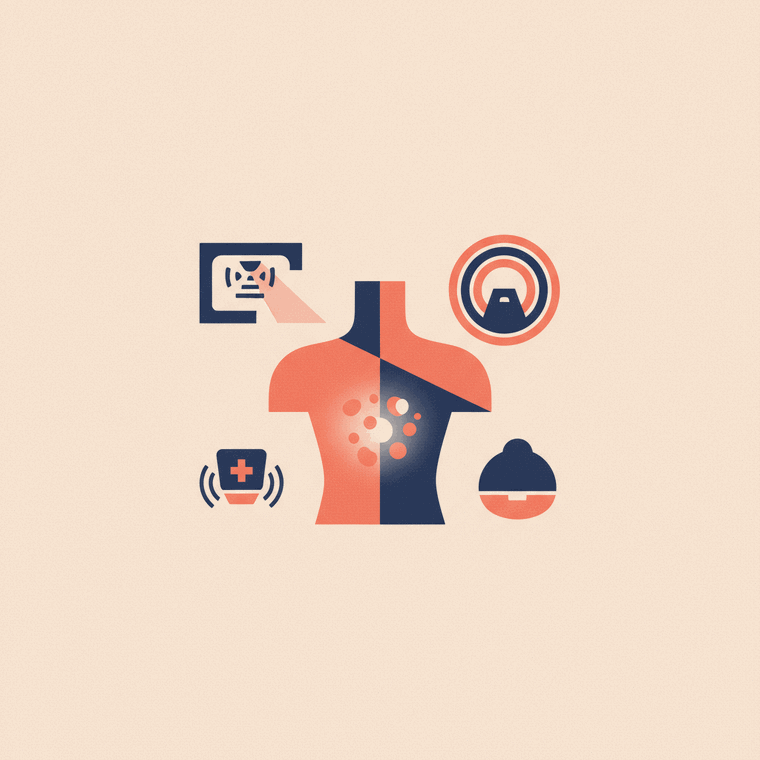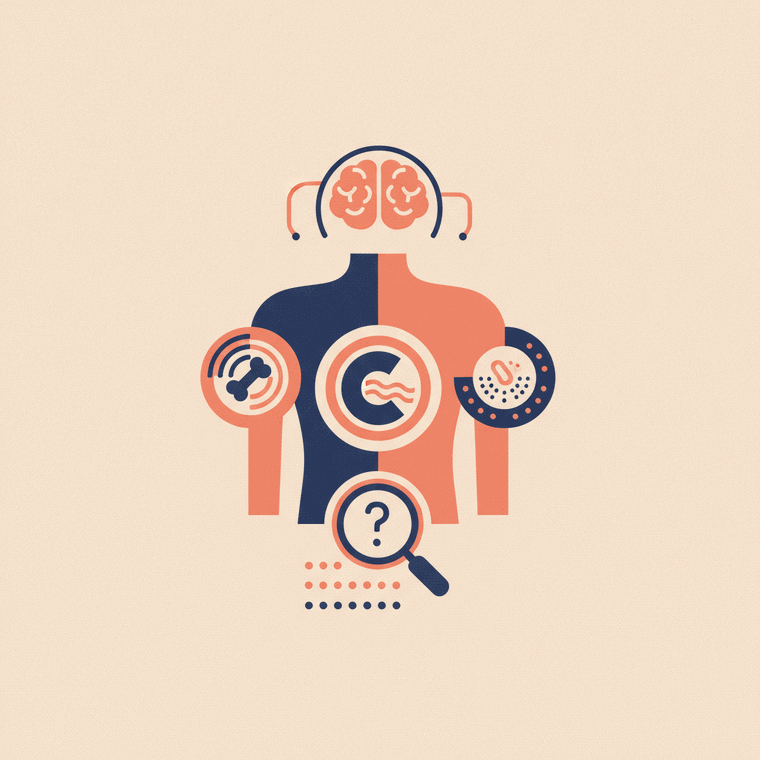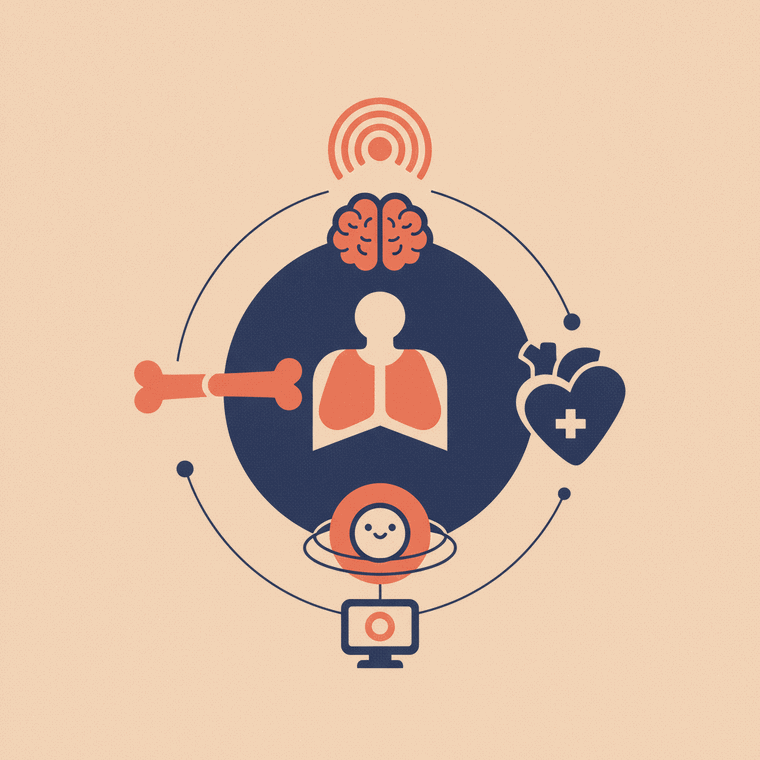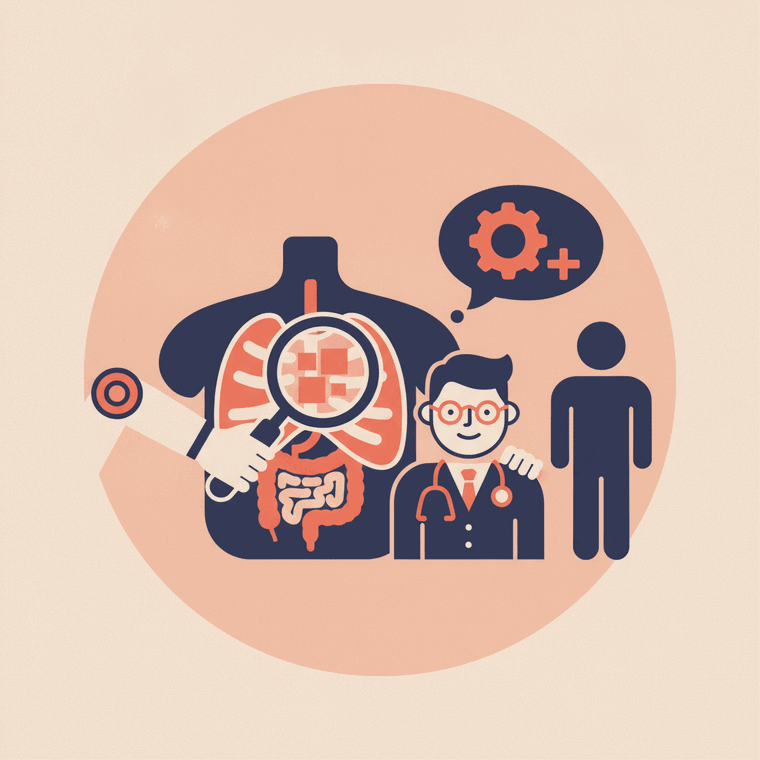
Artificial intelligence (AI) is increasingly used in radiology to help detect findings, prioritise urgent cases, and streamline workflow — but it assists radiologists rather than replacing them. A specialist doctor still reviews and is responsible for your result. In Australia, RANZCR (the radiology college) has published ethical principles and standards, and AI-based tools are regulated by the TGA as medical devices.
Key takeaways
- AI helps detect findings, prioritise urgent cases and streamline workflow.
- It assists radiologists — a specialist doctor still reviews your result.
- RANZCR has published ethical principles and standards for AI in radiology.
- Human oversight and responsibility remain central.
You may have heard that artificial intelligence (AI) is changing radiology. It’s true that AI is increasingly used — but it’s important to understand how: as a tool that assists radiologists, not one that replaces them.
How AI is used
AI (and machine learning) tools can help radiologists by:[1]
- Detecting or flagging findings on a scan for the radiologist’s attention;
- Prioritising urgent cases — for example, pushing a possible stroke or bleed to the top of the list so it’s read sooner;
- Streamlining workflow and measurements, saving time on routine tasks.
The aim is to make reading scans faster and more consistent, supporting the specialist rather than working alone.
A doctor is still responsible
Crucially, a radiologist — a specialist doctor — still reviews the images and is responsible for your result.[1] AI doesn’t make the final call or replace clinical judgement. Like any tool, it can make mistakes, which is one reason human oversight remains essential.
How it’s governed in Australia
AI in medicine raises real questions — accuracy, bias, privacy, accountability. In Australia, RANZCR (the Royal Australian and New Zealand College of Radiologists) has published Ethical Principles and Standards of Practice for AI in clinical radiology.[1] Separately, AI-based diagnostic tools are regulated by the Therapeutic Goods Administration (TGA) as software-based medical devices, which must meet safety and performance requirements before use.[2] The intent is to capture the benefits of AI while protecting patients.
Frequently asked questions
Will AI replace radiologists?
No — current AI assists radiologists by flagging findings, prioritising urgent cases and speeding up routine tasks. A specialist doctor still reviews the images and is responsible for your result.[1]
Is AI in radiology safe?
It’s used as a support tool under human oversight; in Australia RANZCR has published standards, and AI tools are regulated by the TGA as medical devices. A radiologist remains responsible for interpreting your scan.[2]
Sources
- RANZCR — Artificial Intelligence (standards & ethical principles) — www.ranzcr.com/our-work/artificial-intelligence
- Therapeutic Goods Administration (TGA) — Software as a medical device — www.tga.gov.au/how-we-regulate/manufacturing/manufacture-medical-device/manufacture-specific-types-medical-devices/regulation-software-based-medical-devices