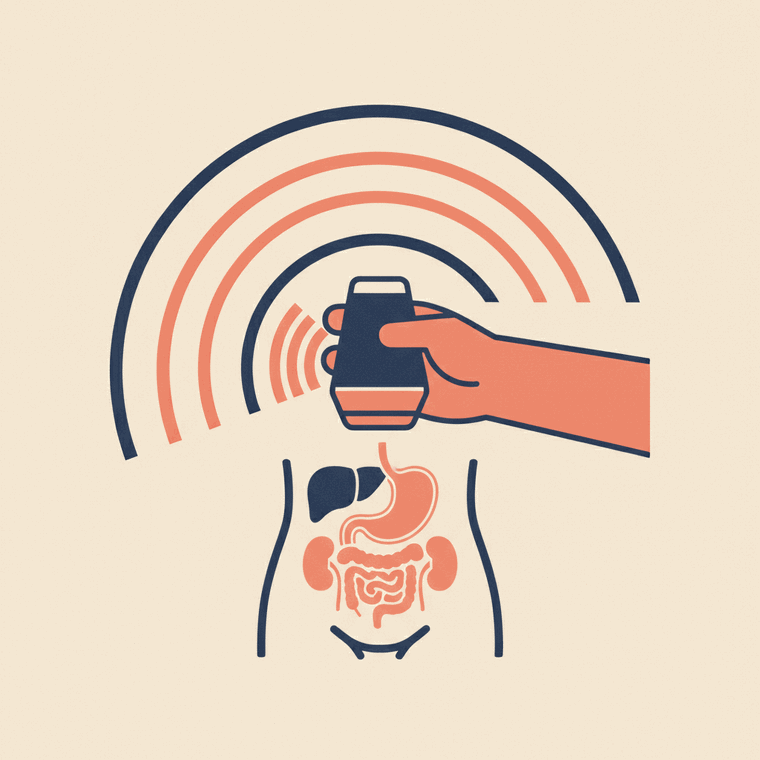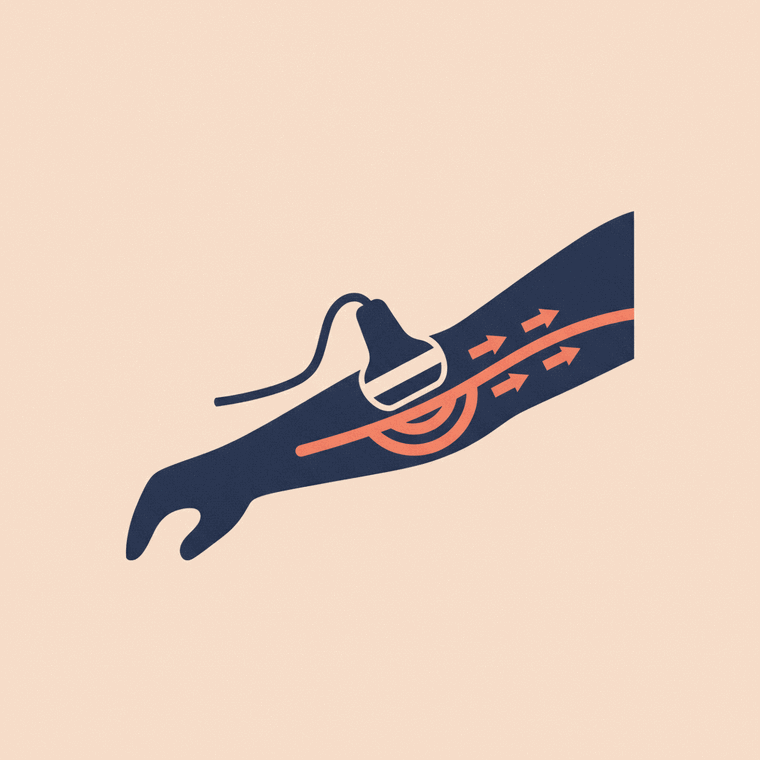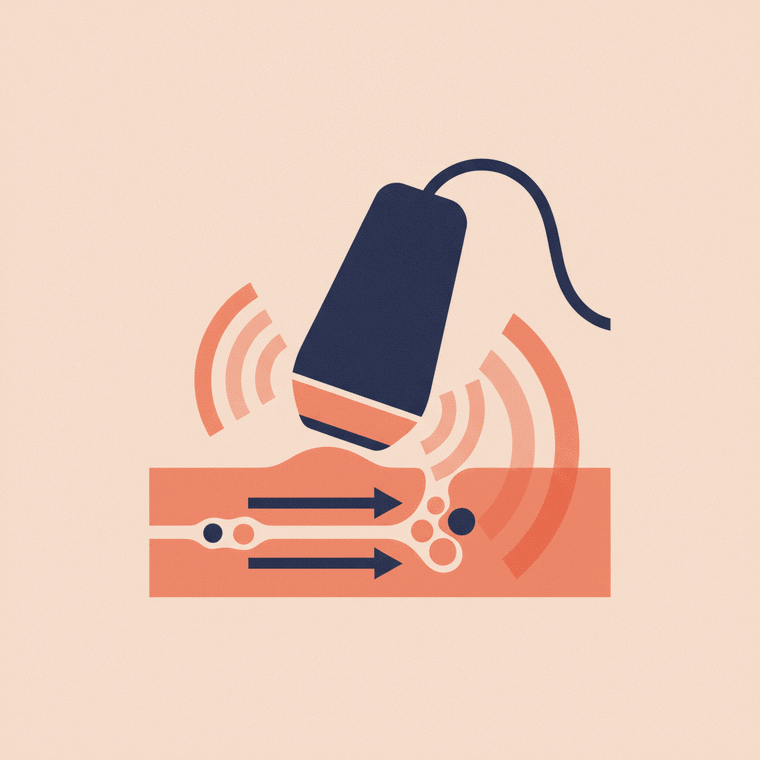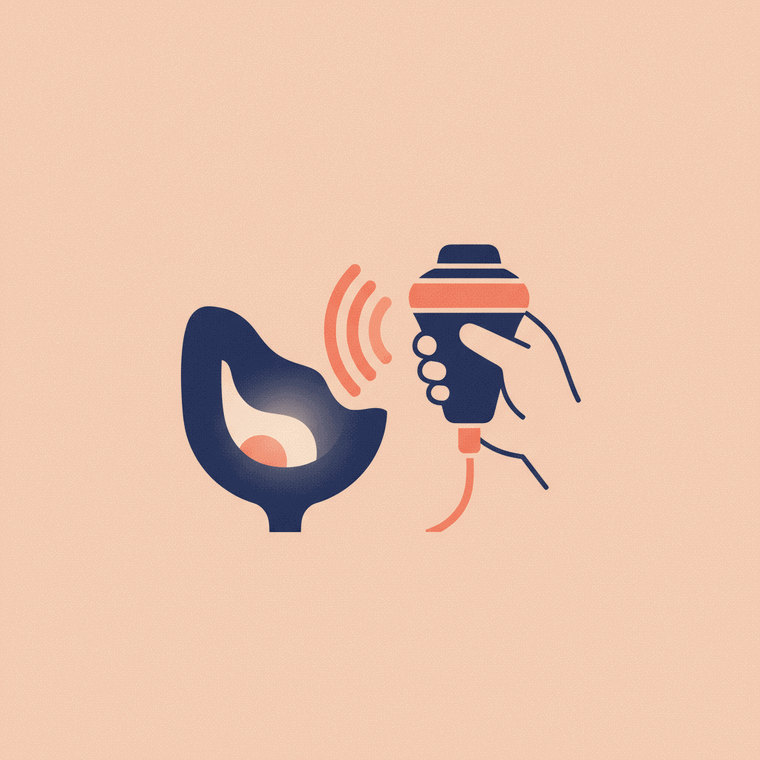
Yes. A Doppler ultrasound is simply a type of ultrasound that measures blood flow, so it uses sound waves, not radiation, and is considered very safe with no known harmful effects — including in pregnancy, where it's used to check the blood flow to the baby. It's painless and needs no aftercare.
Key takeaways
- Doppler is a form of ultrasound — sound waves, not radiation.
- It's very safe, with no known harmful effects.
- It's used safely in pregnancy to check the baby's blood flow.
- It's painless and needs no aftercare.
A “Doppler” ultrasound can sound like something more high-tech and therefore more risky than a regular scan. It isn’t — it’s simply a type of ultrasound that focuses on blood flow.
Why it’s safe
Doppler uses the same high-frequency sound waves as any ultrasound, not ionising radiation.[1] Standard diagnostic ultrasound — including Doppler — has no known harmful effects on the body.[1] There’s:
- No radiation dose — nothing to accumulate.
- No injection for a standard Doppler study.
- No aftercare — you carry on straight away.
Safe in pregnancy
Because it’s radiation-free with no known harm, Doppler ultrasound is used safely in pregnancy — for example to check the blood flow through the umbilical cord and placenta, and to the baby.[2]
What it’s like
A sonographer applies gel and moves a probe over the area; you may hear a rhythmic “whooshing” — that’s your blood flow being detected. It’s painless, with no aftercare.[1]
Frequently asked questions
Is a Doppler scan safe in pregnancy?
Yes — it’s a form of ultrasound, uses sound waves rather than radiation, and has no known harmful effects. It’s used to check blood flow to the baby.[2]
Does a Doppler ultrasound use radiation?
No — none. It uses sound waves, just like any other ultrasound.[1]
What’s the whooshing sound during the scan?
That’s the Doppler picking up your blood flow and converting it to sound — completely normal, and part of how the scan measures how blood is moving.[1]
Sources
- RadiologyInfo.org (RSNA & ACR) — General Ultrasound (benefits vs risks) — www.radiologyinfo.org/en/info/genus
- RANZCR / InsideRadiology — Ultrasound (Coombs) — www.insideradiology.com.au/ultrasound-hp/