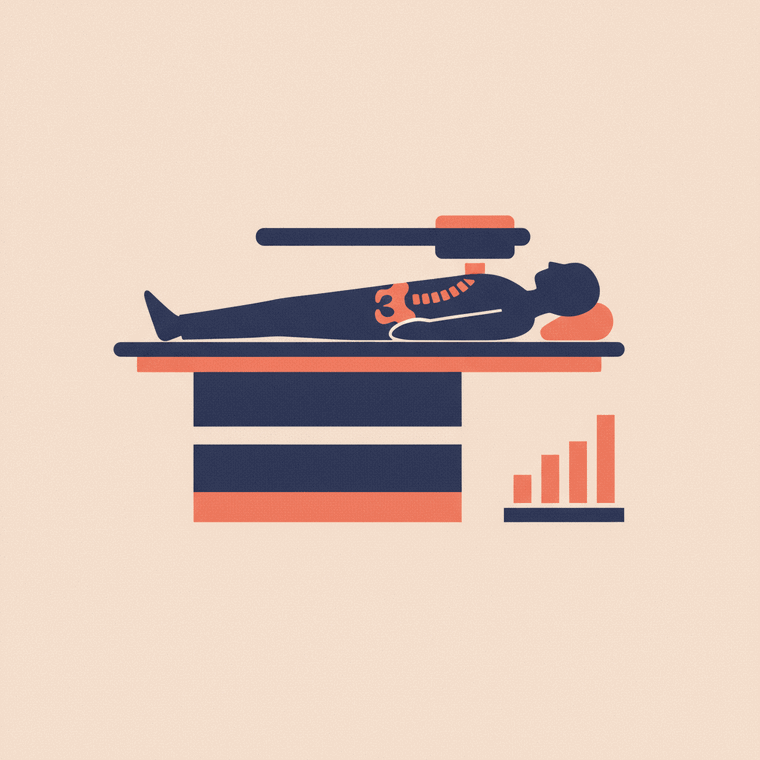
A DXA scan is very safe. It uses a very low dose of radiation — less than a tenth of a chest X-ray, and under a day of natural background — and has no apparent adverse effects. The only absolute contraindication is pregnancy, so tell staff if you could be pregnant. DXA is safe with a pacemaker; metal implants at the hip or spine just mean another site is measured.
Key takeaways
- DXA uses a very low dose of radiation, with no apparent adverse effects.
- The dose is under a day of natural background radiation.
- Pregnancy is the only absolute contraindication.
- DXA is safe for people with a pacemaker or defibrillator.
A DXA scan is among the safest tests in radiology — but it does use a small amount of radiation, so here’s the honest picture.
Very low dose, no adverse effects
A DXA scan uses a very low dose of radiation — less than one-tenth of a standard chest X-ray, and less than a day’s worth of the natural background radiation we all receive.[1] There are no apparent adverse effects from having one, and no radiation stays in your body afterwards.[1] It’s a quick, painless test with nothing injected.
The one absolute contraindication
The only absolute contraindication is pregnancy — because the scan uses ionising radiation, it isn’t done if you’re pregnant.[2] So tell staff if you are, or might be, pregnant; they may ask about your last menstrual period.
Other practical points
- DXA is safe for people with a pacemaker or implantable defibrillator.[2]
- Metal implants at the hip or spine (a hip replacement, spinal fusion or pins) mean those sites can’t be scanned, so another site is used.[2]
- Avoid a DXA for 10–14 days after a scan using contrast or a nuclear medicine tracer, as these can affect the result.[1]
Frequently asked questions
Is the radiation from a DXA scan dangerous?
No — it’s a very low dose (under a day of background radiation) with no apparent adverse effects. The benefit of knowing your bone strength far outweighs the tiny risk.[1]
Can I have a DXA scan with a pacemaker?
Yes — DXA is safe for people with a pacemaker or defibrillator.[2]
Sources
- RadiologyInfo.org (RSNA & ACR) — Bone Density Scan (DEXA/DXA) — www.radiologyinfo.org/en/info/dexa
- RANZCR / InsideRadiology — Bone mineral density scan (DXA) (Hendrich) — www.insideradiology.com.au/bone-mineral-density-scan-hp/