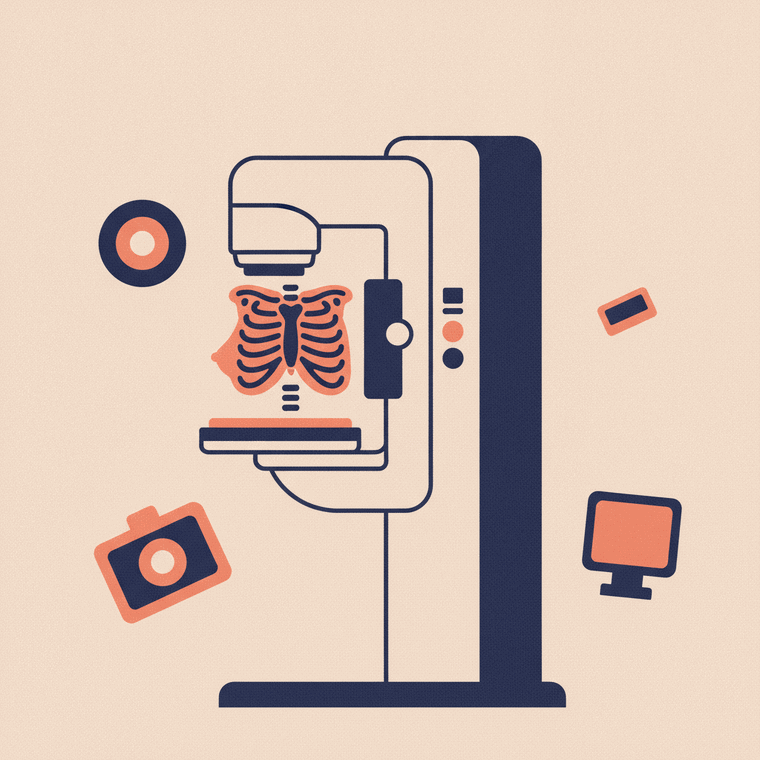
A mammogram is a low-dose X-ray of the breast. A screening mammogram looks for breast cancer in women with no symptoms — small enough that it can't be felt yet. A diagnostic mammogram investigates a specific concern, like a lump, nipple discharge or skin change. It uses a low dose of radiation and involves brief, firm compression of the breast. In Australia, free screening is offered through BreastScreen.
Key takeaways
- A mammogram is a low-dose X-ray of the breast.
- Screening is for women with no symptoms; diagnostic investigates a specific concern.
- Brief, firm compression is needed for a clear image and lasts only seconds.
- If something is found, further tests (ultrasound, MRI or a biopsy) may follow.
A mammogram is an X-ray examination of the breasts. There are two main kinds, used for different reasons.[2]
Screening vs diagnostic
- A screening mammogram is a low-dose X-ray used to look for breast cancer in women without any symptoms — the aim is to find a cancer when it’s too small to be felt as a lump, years before it could be felt.[1] In Australia this is offered free through BreastScreen.
- A diagnostic mammogram is performed when there’s a specific concern — a lump, tenderness, nipple discharge or a skin change found by you, your doctor, or on a screening mammogram. It helps confirm whether the change is benign or needs further tests.[2]
What to expect
Each breast is briefly placed on a flat surface and compressed firmly between two plates for a few seconds while the image is taken. Compression can feel uncomfortable but is short, and it matters — it evens out and spreads the tissue, holds the breast still, and lets a lower dose be used for a clearer image.[1] The whole visit takes about 30 minutes; two views of each breast are usual.
A tip: don’t wear deodorant, powder or lotion on the day, as these can show up as spots and interfere with the read.[1] Mammography uses a low dose of radiation, and the benefit of detecting cancer early outweighs the very small risk.[3]
If something is found
A mammogram doesn’t give a diagnosis on its own. If it shows an area of concern, you may have further tests — a breast ultrasound, an MRI, or a biopsy to sample the tissue.[2] Being called back is common and usually turns out fine: only a minority of call-backs lead to a biopsy, and most biopsies find no cancer.[1]
Frequently asked questions
Does a mammogram hurt?
The compression can be uncomfortable, but it only lasts a few seconds per image. Booking for the week after your period (when breasts are less tender) can help.[1]
Is the radiation from a mammogram dangerous?
No. A mammogram uses a low dose of radiation, and the benefit of finding breast cancer early far outweighs the very small risk.[3]
Being called back means I have cancer, right?
No. About 5–15% of screening mammograms lead to a call-back for more pictures; most turn out normal, and most biopsies find no cancer.[1]
Sources
- RadiologyInfo.org (RSNA & ACR) — Mammography — www.radiologyinfo.org/en/info/mammo
- RANZCR / InsideRadiology — Mammography (diagnostic & screening) — www.insideradiology.com.au/mammography/
- Australian Government — BreastScreen Australia Program — www.health.gov.au/our-work/breastscreen-australia-program