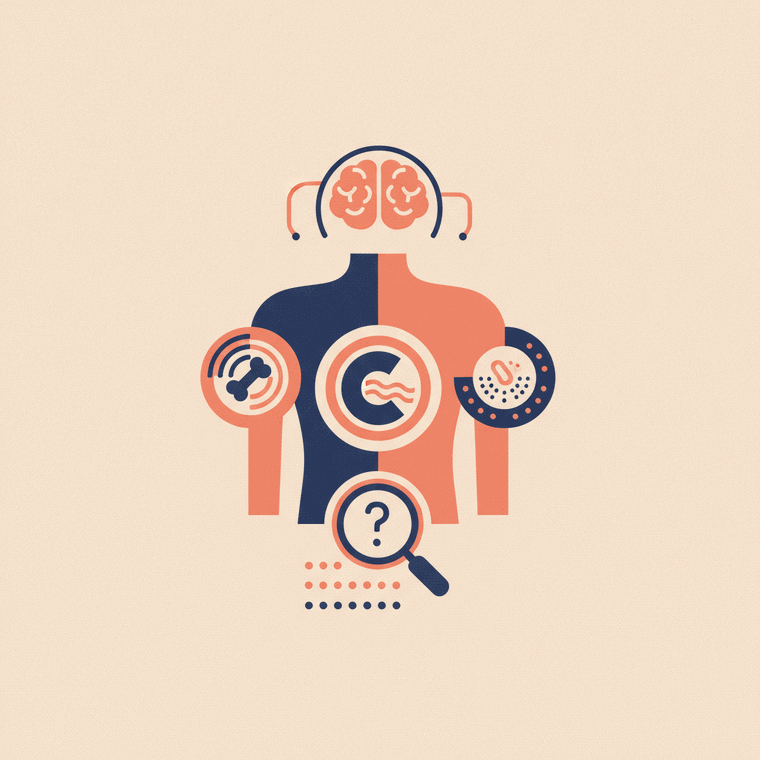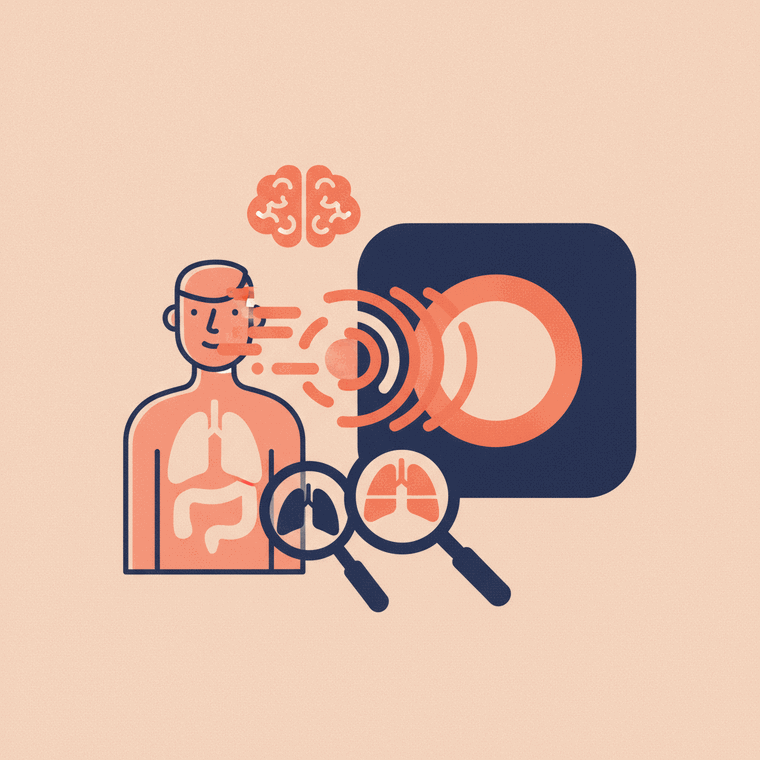
Imaging greatly improves diagnostic accuracy by letting doctors see what's happening inside the body, rather than guessing from symptoms. But no scan is perfect: results are interpreted alongside your symptoms and other tests, scans can occasionally miss something or show incidental findings that turn out to be harmless, and sometimes more than one scan is needed to be sure.
Key takeaways
- Imaging sharpens diagnosis by showing what's happening inside the body.
- Scans are interpreted alongside symptoms and other tests, not alone.
- No scan is perfect — they can miss things or show harmless incidental findings.
- Sometimes more than one scan is needed for certainty.
Imaging has transformed how accurately doctors can diagnose — but it’s worth understanding both its power and its limits.
Why it improves accuracy
Before imaging, much of medicine relied on symptoms and examination alone. Imaging lets doctors actually see inside the body — the size of a tumour, the exact location of a fracture, whether an artery is blocked — turning guesswork into direct evidence.[1] This means:
- conditions can be confirmed (or ruled out) with far more confidence;
- treatment can be targeted precisely;
- change can be measured over time.
A scan is one piece of the picture
Crucially, a scan is interpreted in context — alongside your symptoms, examination and other tests (like blood tests). A radiologist reads the images, but the treating doctor brings it together with everything else they know about you.[1] A finding that looks important in isolation may mean little in context — and vice versa.
The limits, honestly
No scan is perfect:[2]
- A scan can occasionally miss something, or be unclear.
- It can show incidental findings — things picked up by chance that turn out to be harmless, but may lead to further tests.
- Some questions need more than one type of scan to answer with confidence.
Understanding this helps explain why doctors sometimes order further tests rather than relying on a single image — they’re building accuracy, not doubting the scan.
Frequently asked questions
If I’ve had a scan, why do I need more tests?
A scan is one piece of evidence, interpreted with your symptoms and other tests. Further tests may be needed to confirm a finding, clarify something unclear, or check an incidental result — all part of getting the diagnosis right.[1]
Can a scan be wrong?
No test is perfect — a scan can occasionally miss something or flag a harmless finding. That’s why results are interpreted in context and, when needed, confirmed with other tests.[2]
Sources
- RadiologyInfo.org (RSNA & ACR) — What does a radiologist do? — www.radiologyinfo.org/en/info/article-your-radiologist
- RANZCR / InsideRadiology — Radiation risk of medical imaging — www.insideradiology.com.au/radiation-risk/